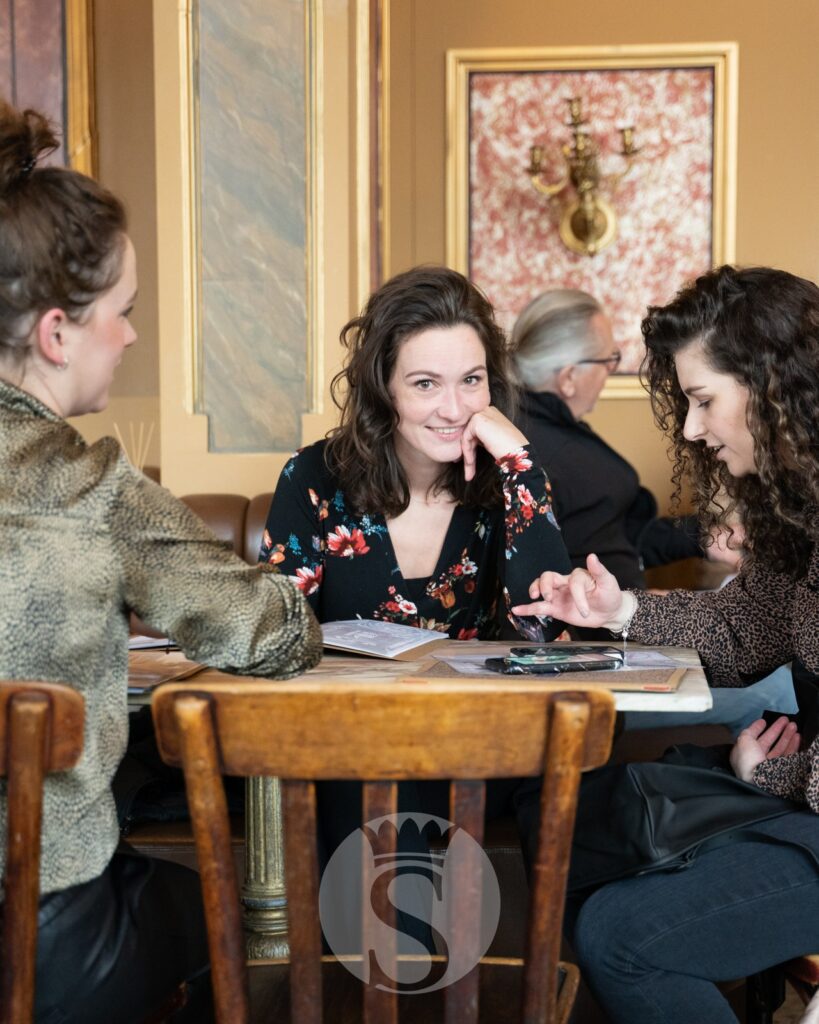
CAFÉ SAVOY · THE HISTORY OF THE HOUSE
Take a seat at Savoy and you are in a building from the late 19th century. The high ceilings, mirrors and chandeliers invite you to look around. Behind the setting are people, changing names and a history that also has its ruptures.
Palais Léon-Wernburg at Linke Wienzeile 36 was built in 1896/97 to plans by the architect Franz von Neumann. Julius Léon von Wernburg had the house built between Köstlergasse, Wienzeile and Laimgrubengasse.
Before it was called Savoy, this was Café Wienzeile, once run by the Kuszak family. In the house's surviving chronicle, the Café Savoy chapter begins in 1983.
The district museum's documentation of the building
Façade drawing of Palais Léon-Wernburg.
The Architekturzentrum Wien also documents the dispossession during the Nazi era: the Léon von Wernburg family's house was taken over by the Diocese of St. Pölten as part of so-called “Aryanisation”.
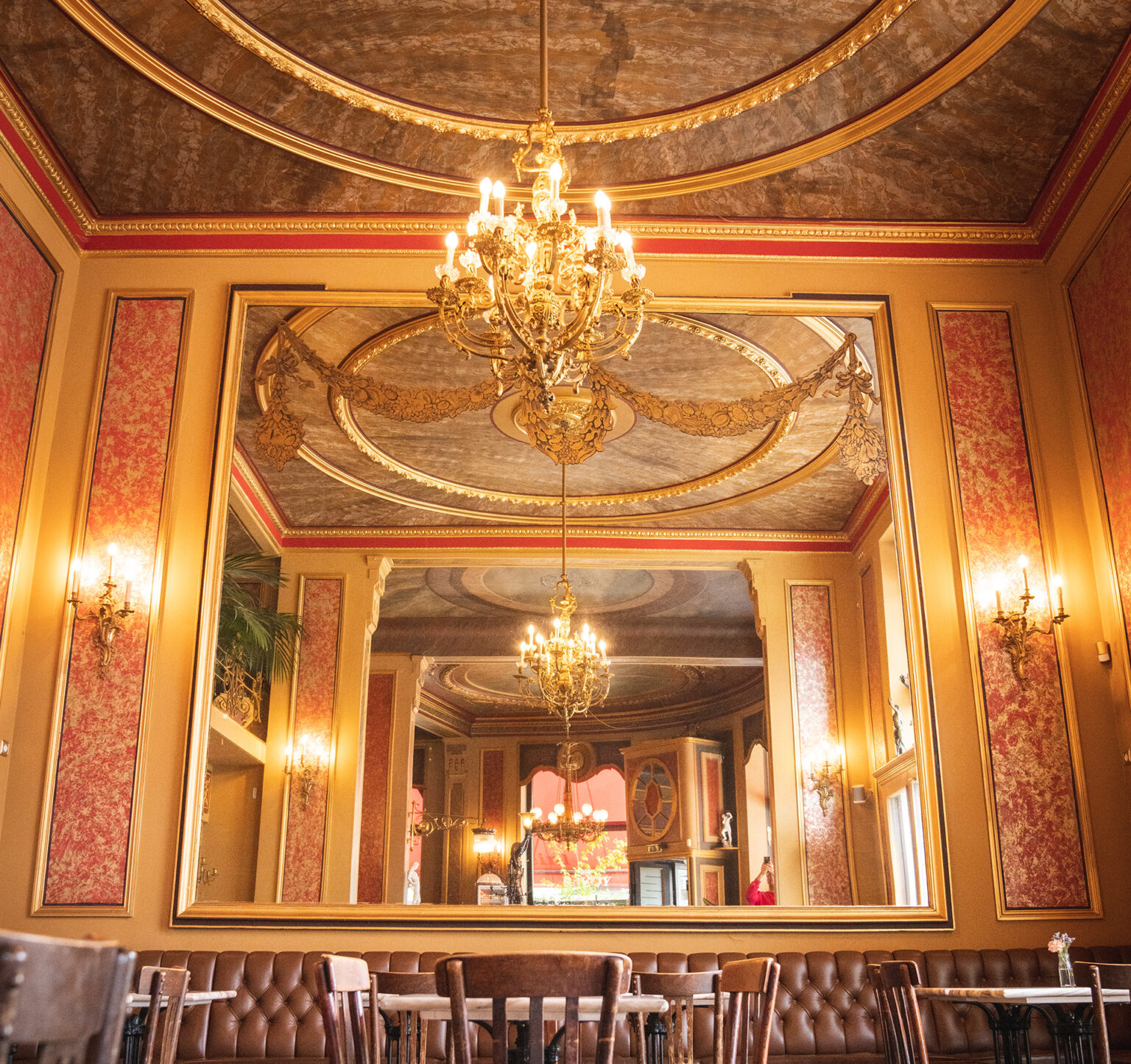
Documentation from the Architekturzentrum WienLarge mirrors and golden chandeliers define Savoy. They open up the room, catch the light and give the coffeehouse its special glow.
Stories surround the furnishings, too: the mirrors are said to come from Belgium, and the chandelier is attributed to Theophil von Hansen. The Egyptian-style figures are said to have once belonged to Rudolf Nureyev.
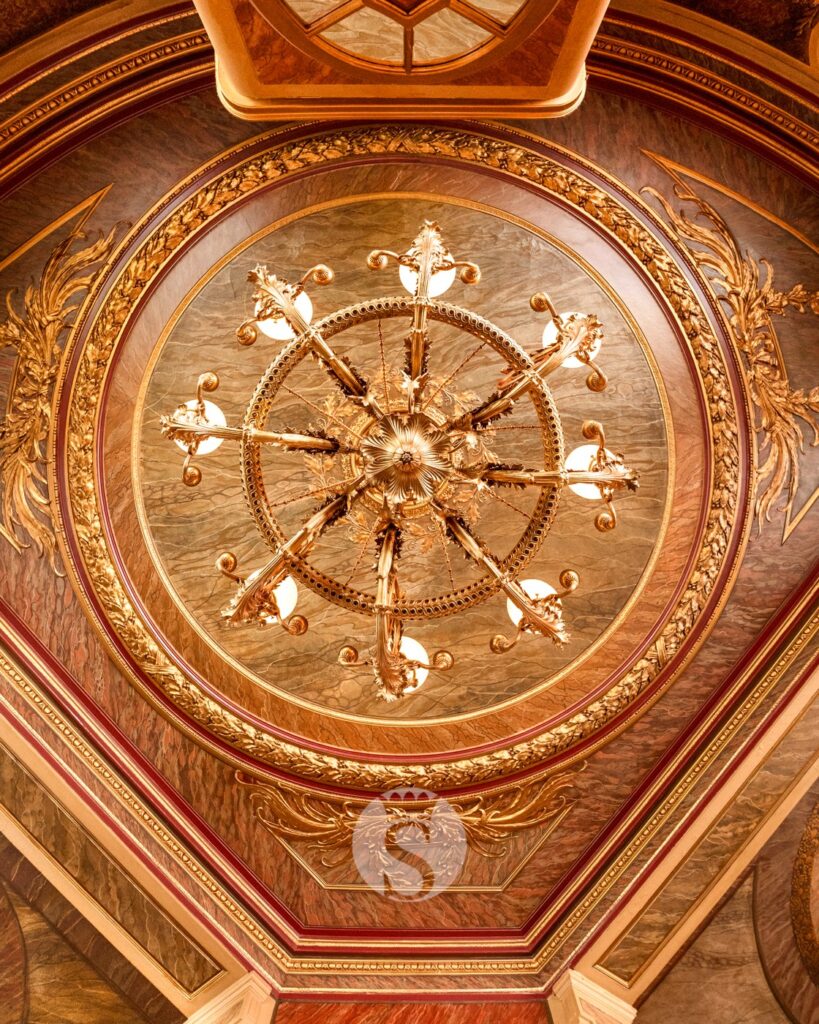
Look up: the chandelier and ceiling decoration at Savoy.
History gives Savoy its setting. People bring it to life: regulars, neighbours and guests from around the world. Some come for coffee, others for a meal or a drink. And nobody has to choose just one side of Savoy.